
Blog
A Complete Guide to TV Stands: Types, Benefits & Use Cases in 2026

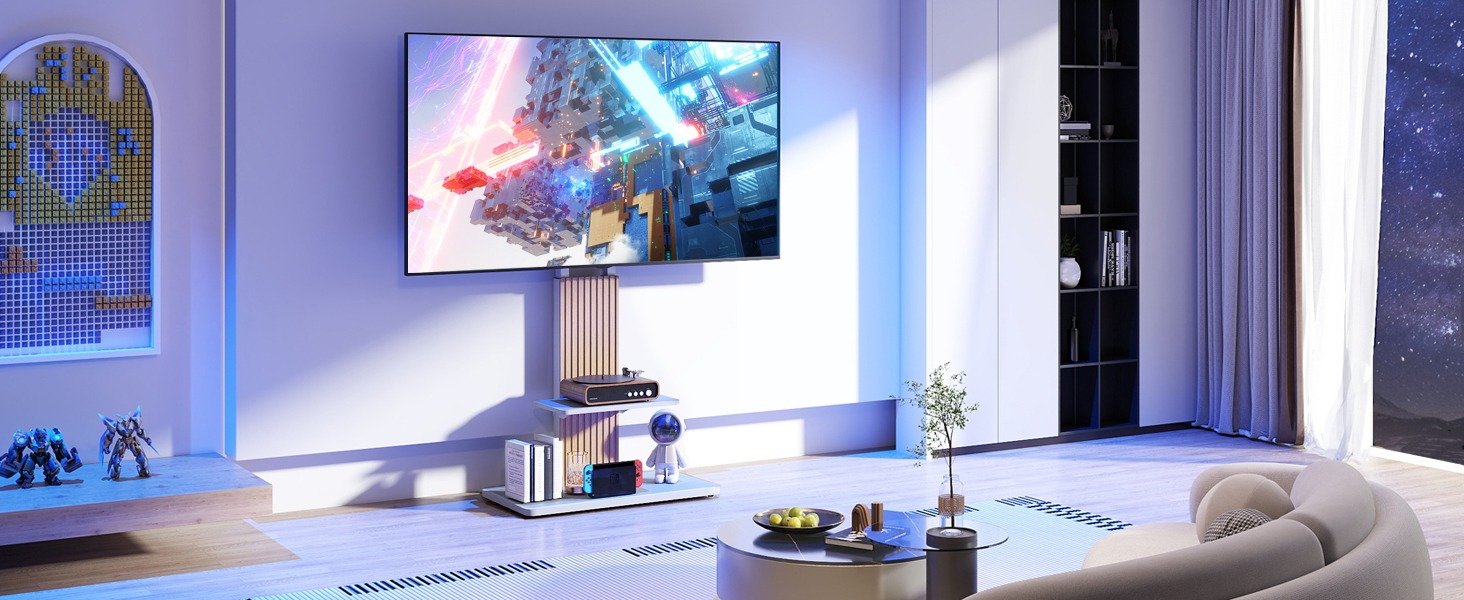
A TV stand is a support system designed to hold flat-panel or curved televisions along with equipment such as gaming consoles, streaming devices, and sound systems. Unlike wall mounts, TV stands rest on the floor and can provide flexible placement, storage, and cable management. The main types include floor stands, which provide stable support for fixed setups; mobile stands, which use wheels and often offer height adjustment for easy repositioning; and motorized stands, which provide powered adjustments such as height, tilt, or swivel. When choosing a TV stand, check your TV’s screen size, weight capacity, and VESA mounting pattern to ensure compatibility, then consider viewing height, construction and stability, mobility, storage, cable management, and the intended environment. Common materials include durable metal frames combined with wood or MDF shelves, depending on the design and application.
Choose the right stand based on screen size, weight capacity, VESA compatibility, and desired features such as mobility, height adjustment, and storage. TV floor stands are generally designed to support TV screens up to 65 inches.
TV Floor Stands
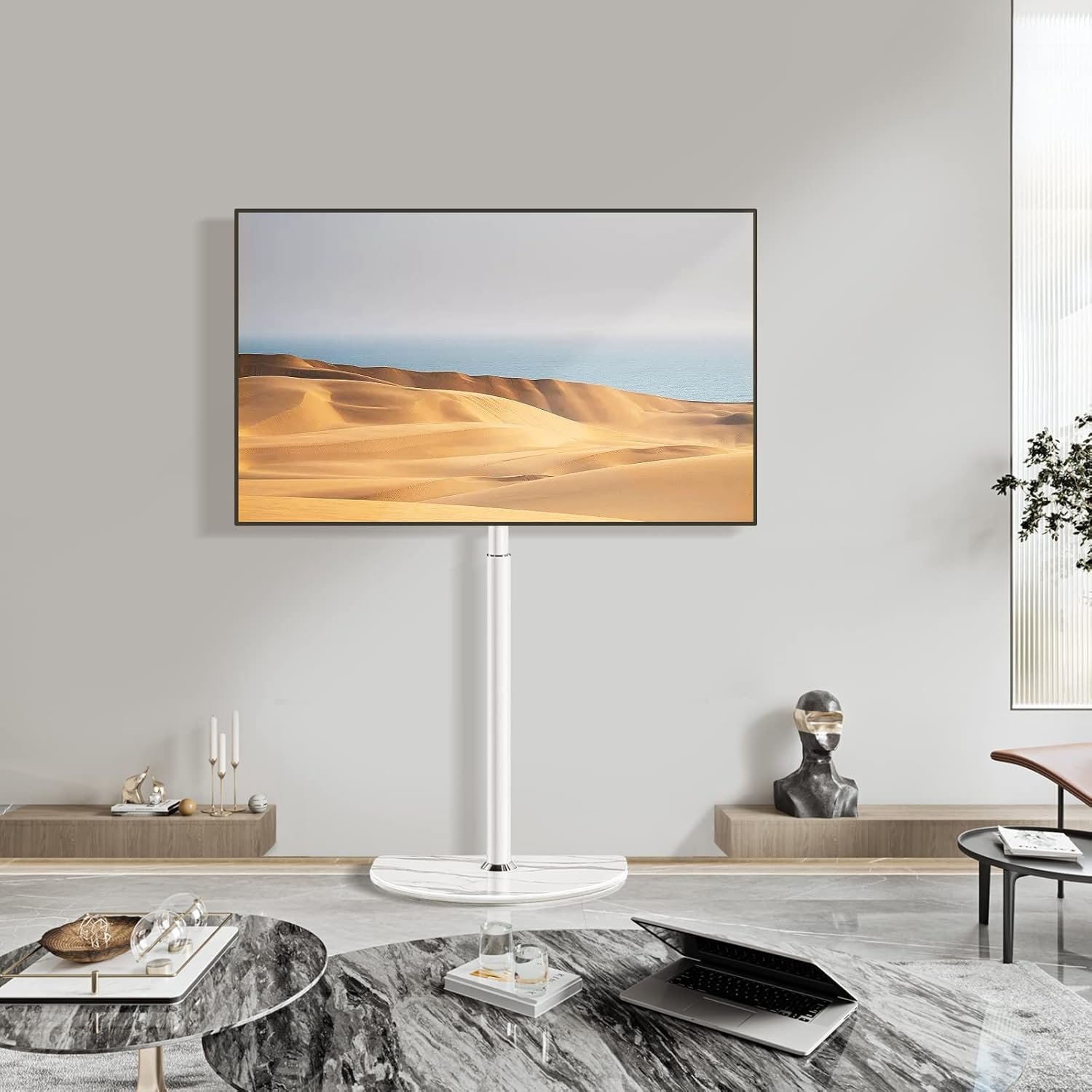
Floor TV stands are freestanding units designed to support a television directly from the floor without requiring wall mounting. They are available in various designs, including steel or metal frames, pedestal-style bases, and models with wood or MDF shelves for storing AV equipment. Their construction and weight capacity vary by model, with heavy-duty stands available for larger, heavier TVs. Most provide a stable base, while some include adjustable feet, anti-slip pads, or other stability features for different floor surfaces. Depending on the design, floor stands may offer fixed or adjustable viewing heights, tilt functionality, shelves, and built-in cable management to keep equipment and cables organized. The appropriate stand height depends on the specific model, TV size, and desired viewing position, so compatibility should always be checked based on TV size, weight, VESA pattern, and installation requirements.
Benefits & Features

Stability
Floor stands are stationary and offer very stable support, often more than wall mounts. A steel base can hold heavy TVs while preventing wobble.

Installation
Pretty easy to install. Assembly typically involves attaching the base and upright column, then mounting the TV via the VESA bracket.

Cable Management
Good floor stands feature integrated cable channels or back panels to route cords, keeping wires organized and hidden.

Use Cases
Floor stands are excellent for living rooms, bedrooms, or offices where the layout is fixed. They provide shelves for consoles or receivers.
Pros: Very stable and sturdy (especially with a heavy steel base). Often includes shelves/storage. Clean aesthetic with hidden cables.
Cons: limited to one location.
Mobile TV Stands
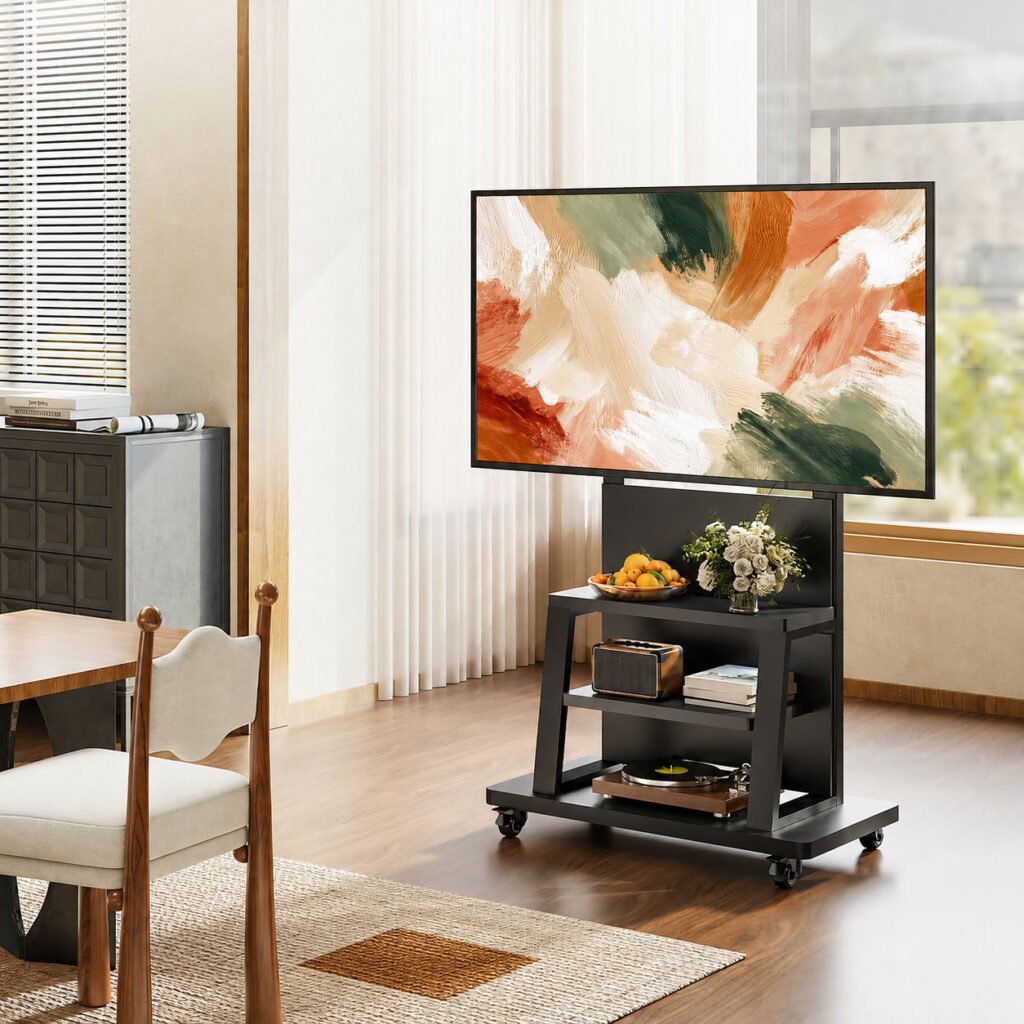
Mobile stands are wheeled carts with a TV mount, designed to move the TV easily. Key features include a heavy-duty weighted base (often steel) to lower the center of gravity and prevent tipping. Stands have lockable caster wheels, preferably polyurethane (PU) tires to protect floors. A vertical column (or dual columns) supports the TV, often with hidden channels for cables. Many models include adjustable-height mounting, tilt/swivel, and one or more shelves for media devices. Mobile TV stands support TVs up to 120 inches, providing a secure and stable solution for large screens.
Benefits & Features

Mobility
Mobile TV stands use lockable smooth-rolling casters for easy movement between rooms or viewing positions. PU or rubberized wheels roll quietly on hardwood, tile, and carpet while providing good grip.

Ergonomic Design
Most mobile TV stands come with height-adjustable functionality, enabling you to position the TV at a comfortable eye level.Some come with Tilt and swivel adjustments to further improve viewing angles.
Cable Management
Most mobile TV carts feature built-in cable channels or clips that keep wires organized and prevent tangling during movement. Cables can be secured along the column while allowing enough slack for smooth repositioning.
Use Cases
Mobile TV Stands are ideal for educational settings, conference rooms, trade shows, or a flexible living room layout. Common uses include digital signage, collaborative workplaces, or multi-purpose rooms.
Pros: Highly flexible positioning. Can adapt room layout on the fly. Often includes AV shelves and smart cable routes.
Cons: More complex to install.
Motorised TV Stands
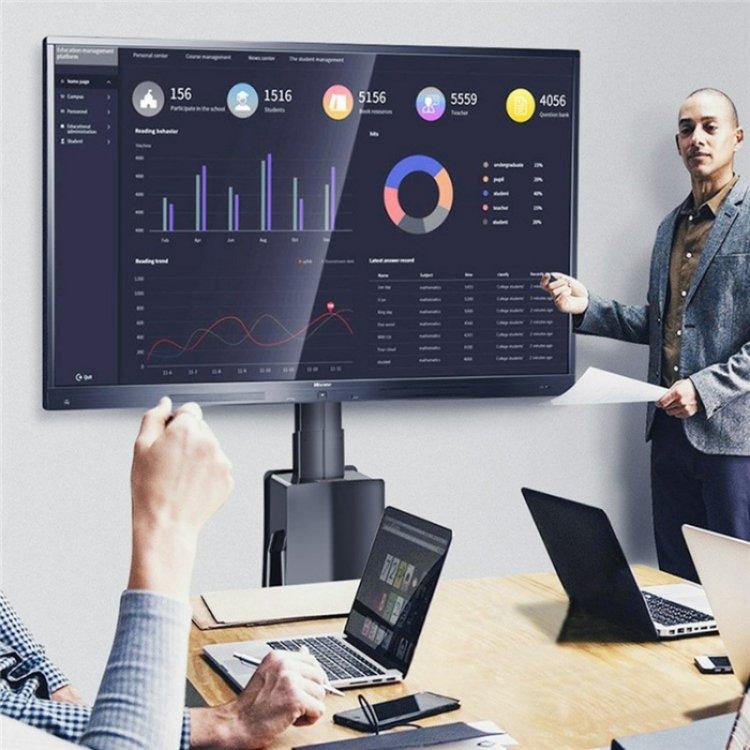
Motorized stands incorporate an electric lift. With a remote control or app, the stand can smoothly raise, lower the TV. Some allow pre-set height memory (useful for switching between sitting/standing positions). They still have a sturdy base, but often use a powered actuator inside the column. Motorized TV stands are designed for heavy-duty screens, with compatibility ranging from 80 to 120 inches, including 85″, 90″, 100″, and 120″ screens.
Benefits & Features
Mobility
Motorised TV stands are typically equipped with casters because their heavy-duty construction makes them difficult to move without them. The wheels allow the stand and TV to be re-positioned easily when needed.

Auto Adjustments
Enjoy effortless viewing with automatic height adjustment at the touch of a button, bringing your screen to the perfect position. Electric movement makes it easy to raise or lower your TV smoothly for personalised comfort.
Cable Management
Motorized TV stands require power for the motor and TV, so keeping the cables organized is essential. Many designs route and conceal cables through the stand’s column, creating a clean, tidy setup while reducing visible wires.
Use Cases
This is ideal for home theaters (sit vs. standing viewing) or for accessibility (e.g. motorized stands on hospital TVs). They also keep cables hidden for a clean look. In commercial signage, motorized stands add a wow factor.
Pros: Ultimate adjustability and convenience. “Future-proof” ergonomic setup for any seating position. Sleek, high-tech appeal.
Cons: High cost, need for electricity, more complex maintenance.